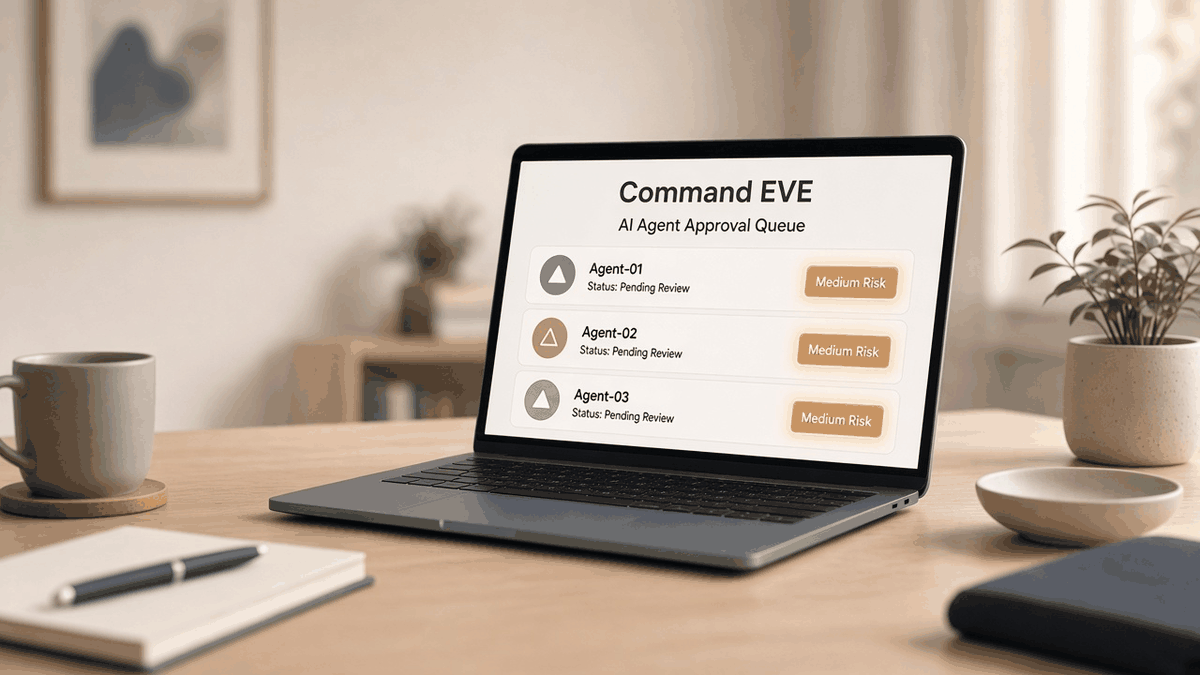
AI PoC to Production: Scaling a 50-Person Consultancy
Turn three winning pilots into firm-wide capability with a 12-month operating model for AI PoC to production consultancy scaling without margin loss.


You have three winning pilots: a research assistant that associates keep using, a proposal workflow that partners want in the next pitch cycle, and a meeting-notes agent that has survived real client work. That is the moment when AI PoC to production consultancy scaling stops being a technology question and becomes an operating-model question. The pilots worked because a few capable people protected them, adjusted them, and explained away the rough edges.
Firm-wide adoption will fail if it still depends on that kind of hero effort. A 50-person consultancy needs a repeatable AI operating model: named owners, an AI evaluation harness, AI cost caps, an AI governance framework, vendor controls, and a clean change-management rhythm. The aim is not to make every consultant an AI specialist; it is to make the approved workflows reliable enough that consultants can use them without turning each engagement into an experiment.
The market context is no longer early experimentation. McKinsey's agentic AI research describes a gap between broad generative AI deployment and material bottom-line impact, with many higher-value workflows still trapped before scale (McKinsey). OECD research on AI adoption also points to complementary assets, skills, and organizational readiness as adoption constraints rather than model access alone (OECD). For a consultancy, the implication is blunt: scaling requires operating discipline before it requires more tools.
Why AI PoC to production consultancy scaling fails at 50 people
AI PoC to production consultancy scaling fails at 50 people because the firm is large enough to create unmanaged complexity and still too small to hide it inside a platform team. A partner can sponsor one pilot by force of personality, but that does not scale across practices, client contexts, vendors, and billing models. Once multiple workflows touch client delivery, the questions move from "does this work?" to "who owns it, what does it cost, and what happens when it fails?"
The awkward part is that the first pilots often look better than the production program. Pilots are selected for enthusiasm, narrow scope, and forgiving users; production workflows face busy teams, edge cases, access constraints, and changing vendor behavior. If the firm does not create a productionization path, every successful pilot becomes a bespoke internal product with no durable owner.
TL;DR for partners
- Treat each approved AI workflow as a service, not as a prompt.
- Put one owner in operations, one evaluation lead in delivery, and one sponsor in the partnership.
- Build the evaluation harness before rolling a workflow into a practice area.
- Publish cost per successful run so partners can make informed tradeoffs.
- Cut weak pilots early and reinvest capacity in repeatable delivery workflows.
These points matter because consultancy AI adoption usually fails in the middle, not at the start. The first demo creates enthusiasm, the second creates internal demand, and the third exposes the absence of governance. At that point, the firm either becomes more disciplined or lets shadow workflows grow until finance, security, or client quality forces a harder reset.
The three failure patterns to expect
The first pattern is the pilot museum: many demos, no durable production workflow. A manager can show an impressive sandbox example, but nobody owns the input contract, review process, release path, or support queue. The work looks innovative in steering meetings and remains irrelevant in weekly delivery.
The second pattern is hero dependency. One senior manager keeps the workflow alive by hand-editing prompts, checking outputs, and explaining errors to the team. When that person moves to a client crisis, takes leave, or changes role, the workflow degrades because the firm never converted expertise into a managed process.
The third pattern is shadow spend. Teams subscribe to overlapping tools because they need speed and do not see a trusted internal route. The cost problem is not just duplicate subscriptions; it is fragmented data handling, inconsistent vendor terms, and no shared evidence about which workflows actually improve margin.
Why this size is difficult
Below 20 people, a founder can still hold the whole system in their head. Above 200 people, a firm can usually justify a platform team, procurement support, and dedicated model governance. At 50 people, you need enough control to protect margin and client trust without creating a bureaucracy that slows delivery.
That is why the right model is deliberately narrow. You do not need a full enterprise AI office, and you should not copy one. You need a compact operating loop that decides which workflows graduate, how they are tested, who can use them, what they cost, and how they are retired when they stop earning their place.
What changes between pilot and production?
The work changes from proving usefulness to proving repeatability. A pilot succeeds when a narrow workflow beats the manual baseline on selected cases; production succeeds when the workflow performs reliably across teams, weeks, and client contexts. That shift demands a stronger contract around inputs, outputs, review, cost, and accountability.
In a pilot, a user can tolerate rough edges because the experiment is supervised. In production, those rough edges become delivery risk, rework, or hidden cost. The firm must decide what gets reviewed by a human, what can be automated, where the fallback path lives, and who is accountable when the model, vendor, or workflow underperforms.

The productionization checklist
Use this checklist before a pilot enters a rollout wave. The threshold values are editorial operating recommendations for a small consultancy, not external benchmarks. Adjust them only when you can explain what risk you are accepting.
| Production question | Minimum evidence before rollout | Owner |
|---|---|---|
| Who owns the workflow after launch? | Named process owner in operations | Operations lead |
| What input is allowed? | Written input contract and examples | Process owner |
| What output is expected? | Written output contract, review step, and SLA | Delivery lead |
| How is quality tested? | AI evaluation harness with representative cases | Evaluation lead |
| How is spend controlled? | Cost cap per run and per month | Operations lead |
| What happens when the model fails? | Manual fallback path and escalation route | Process owner |
| What happens when a client sees a wrong output? | Incident definition and response playbook | Governance sponsor |
| Is the vendor acceptable? | Vendor risk review stored with the workflow charter | Governance sponsor |
This table is intentionally operational rather than theoretical. A workflow that cannot answer these questions is still a pilot, even if people are already using it every week. Calling it production before these controls exist only transfers the risk from the pilot team to the whole firm.
The 12-month AI operating model for AI PoC to production consultancy scaling
A 12-month AI operating model gives the firm enough time to build control before scaling usage. The first half of the year creates the governance, evaluation, cost, and vendor foundation. The second half turns that foundation into practice-area adoption, portfolio decisions, and a credible budget for year two.
| Month | Focus | Primary owner | Exit criterion |
|---|---|---|---|
| 1-2 | Governance charter, roles, and decision rights | Managing partner | Charter approved and owners named |
| 3-4 | AI evaluation harness, cost model, and vendor shortlist | Operations lead and delivery lead | Weekly harness run and workflow-level cost view |
| 5-6 | Industrialize two pilots and retire one weak candidate | Operations lead | Two workflows meet the checklist and one is formally retired |
| 7-8 | Roll out to selected practice areas | Practice heads | Approved users onboarded through SSO and workflow training |
| 9-10 | Add new workflows from the prioritized backlog | Operations lead | New workflows pass the productionization checklist |
| 11-12 | Complete annual review and year-two budget | Managing partner | Partner pack shows usage, cost, quality, incidents, and next decisions |
This sequence keeps the firm from confusing more activity with more capability. The first six months may feel slow because the work is mostly invisible: charters, access rules, examples, vendor reviews, dashboards, and fallback paths. That invisible work is the difference between a consultancy that scales AI and one that accumulates disconnected tools.
The build phase
The build phase is where the firm earns the right to scale. The operations lead creates the workflow backlog, the delivery lead turns real work into evaluation examples, and the partner sponsor settles decision rights before conflicts appear. This is also the point to connect the AI program to existing risk and delivery routines rather than inventing a parallel management system.
Use established guidance as scaffolding, not as a compliance costume. The NIST AI Risk Management Framework gives a practical vocabulary for governing, mapping, measuring, and managing AI risk (NIST). ISO/IEC 42001 provides a management-system reference for organizations that need a more formal structure around AI responsibilities and continual improvement (ISO).
The rollout phase
The rollout phase is where AI change management becomes visible. Practice heads see which workflows help delivery and which only create another review burden. Users also start finding edge cases the pilot team did not see, so the evaluation harness and incident loop must be treated as live operating assets.
Do not expand simply because demand is high. Expand when the workflow has an owner, passes its harness, has a cost cap, and fits the practice area's delivery rhythm. If a workflow cannot earn adoption without constant persuasion, retire it or return it to the sandbox.
How do you move from AI pilot to production without margin loss?
You move from AI pilot to production without margin loss by funding only workflows that can be measured, capped, and owned. Margin disappears when AI work creates hidden review time, duplicate subscriptions, unclear accountability, or client rework. A disciplined production path makes each workflow prove that it saves more capacity than it consumes.
The fastest way to protect margin is to make unit economics visible. Cost per successful run, human review time, and incident count should be shown together because none of them is sufficient alone. A cheap workflow with poor outputs is expensive, and a high-quality workflow that nobody uses is still waste.
Set AI cost caps at the workflow level
Firm-level AI cost caps sound prudent, but they fire too late to guide behavior. Set caps per workflow, per month, and per run so the owner can see which process is drifting. Alerts should reach the process owner early enough to change routing, pause a workflow, or review demand before the monthly bill becomes a surprise.
The cap should include model usage, vendor subscription cost, implementation support, and review time where that time is material. Do not hide human review effort outside the model budget, because that is how a workflow looks profitable in the tool dashboard and unprofitable in delivery. The Six-Month Payback: Designing an AI Agent Pilot for SMBs explains how to connect these assumptions to a payback case.
Route by stakes, not by hype
Not every task deserves the most capable model. A meeting summary, proposal skeleton, and regulated client memo do not carry the same risk. Route work by stakes, evaluate the quality delta, and document the routing rule so users understand why the workflow behaves differently across contexts.
Google Cloud's 2025 DORA report frames successful AI adoption as a systems problem rather than a tooling problem, which is useful for consultancies because delivery quality depends on the surrounding workflow (Google Cloud DORA). The lesson is not limited to software teams. AI tools perform better when policy, workflow design, measurement, and human review move together.

Publish workflow economics
Publish workflow economics in a format partners can challenge. They should see usage, cost, pass rate, review time, and incidents in one place. This turns the discussion from "is AI worth it?" into "which workflows deserve more investment?"
Use placeholders until you have actual data, and label them clearly. Do not annualize early numbers or multiply a good week into a business case. The moment the dashboard starts pretending to know more than it knows, partners stop trusting the program.
Governance that keeps client trust intact
Governance in a 50-person consultancy should fit on two pages and run every week. The goal is not to slow delivery; it is to prevent uncontrolled workflows from reaching client work without owners, evidence, and fallback paths. A lightweight AI governance framework is enough if it has clear decision rights and visible consequences.
The European Commission's AI Act guidance is especially relevant for vendor and model awareness because general-purpose AI obligations began applying on a phased schedule, including obligations for providers from August 2025 (European Commission). A small consultancy does not need to turn every internal workflow into a legal program. It does need a register of approved tools, use cases, data categories, owners, and client-facing restrictions.
The three roles you actually need
You need a product owner in operations, an evaluation lead in delivery, and a governance sponsor in the partnership. The operations owner runs the workflow backlog and makes sure each production workflow has a process home. The evaluation lead owns examples, pass criteria, and quality reporting.
The governance sponsor makes the uncomfortable calls. They approve vendor exposure, pause workflows after incidents, and defend retirement decisions when a popular pilot does not meet the bar. These three people should meet weekly, and the meeting should decide concrete workflow actions rather than debate general AI strategy.
Decision rights, not decision theater
A committee is useful only if it makes decisions faster and clearer. For most 50-person firms, a one-page decision matrix is better than a standing governance board with vague authority. Define who decides vendor approval, cost caps, prompt changes, client-facing use, data restrictions, and incident escalation.
The Sanctioned AI Tools Policy Template for Shadow AI Control is a useful starting point for the tool and access side. Do not copy any template unchanged. Your policy should reflect how your firm actually sells, staffs, reviews, and delivers work.
Vendor risk without a security team
A 50-person consultancy will not build a full vendor risk function, but it can run a repeatable review. The review should cover data retention, training use, regional processing, security attestations, audit rights, model-change notice, support commitments, and exit terms. Store the review with the workflow charter so the firm can connect vendor risk to the actual use case.
The Foundation Model Vendor Risk Assessment: 2026 Buyer's Guide and the GPAI Code of Practice Buyer Checklist: 15 Vendor Questions give procurement and partner sponsors a practical question set. Use them to make vendor selection auditable without turning the process into a large-company procurement theater. The standard is simple: if the workflow touches client work, someone must be able to explain why the vendor is acceptable.
Build an AI evaluation harness you can trust
An AI evaluation harness is the backbone of AI pilot to production work. Without it, every prompt change, model update, and vendor switch becomes a debate about opinions. With it, the firm can test whether quality is stable enough for production and whether cheaper routing still meets the delivery bar.
Start with representative cases drawn from real workflow patterns, with sensitive information removed or transformed. Include common work, awkward edge cases, and examples that would be embarrassing if the output reached a client unchanged. The harness does not need to be academically perfect; it needs to be consistent enough to detect drift and support decisions.
Measure four things first
Start with four metrics: pass rate, cost per successful run, human review time, and incident count. Pass rate tells you whether the workflow is meeting the output contract. Cost per successful run keeps the economics honest, while review time shows whether AI is really saving capacity.
Incident count protects trust. Define incidents before launch, because definitions written after a failure tend to protect the workflow rather than the client. A wrong client-facing output, a data-handling breach, a prompt-injection event, and a vendor outage that blocks committed delivery should all be considered incident candidates.
Connect evaluation to release changes
Vendor models change, prompts change, and internal templates change. The evaluation harness should run before a material workflow change and after a vendor change notice when the vendor provides one. If quality drops, the workflow owner should decide whether to roll back, change routing, adjust review, or pause usage.
This is where productionization becomes a habit rather than a launch checklist. A workflow that passed in May can fail in September if source templates, client expectations, or model behavior changed. The harness gives the firm a way to notice that before a client does.
Change management for consultants, not tool enthusiasts
AI change management works when it is tied to the job consultants already have. Consultants do not need broad lectures about AI transformation before they can use a proposal workflow. They need to see where the workflow starts, what it produces, what they must review, and what quality bar they remain accountable for.
Do not run generic "AI training" as the main adoption vehicle. Run short workflow sessions delivered by peers who already use the process in delivery. A consultant is more likely to trust a colleague showing Tuesday's proposal workflow than a central team presenting a feature tour.
Onboard by workflow
Each workflow should have its own onboarding path. The path should show the input, the output, the review step, the fallback path, and the support contact. Keep it short enough that the workflow can be learned in the context of real work.
Track adoption by workflow and practice area, but interpret low adoption carefully. Low usage may mean poor training, but it may also mean the workflow does not fit the practice's work. Treat that as product feedback, not as resistance to change.
Publish wins and retirements
The firms that scale AI well talk openly about what they killed. Retirement is not failure; it is portfolio hygiene. A retired workflow releases budget, attention, and trust back into the system.
Publish wins and retirements in the same operating rhythm. A monthly update should say which workflows shipped, which improved, which were paused, and which were retired. This teaches the partnership that the AI portfolio is managed, not merely accumulated.
Protect career trust
Associates will worry that AI changes the base of the consulting pyramid. Avoid vague reassurance and be specific about how review, synthesis, client judgment, and delivery ownership remain human accountabilities. The SMB AI Confidence Productivity Gap: 2026 ROI Playbook gives a broader framing for productivity conversations that do not reduce the issue to hours saved.
The honest message is that some tasks will move up-market and some training paths will need redesign. A consultancy that admits this can redesign staffing, mentoring, and quality review with employees in the room. A firm that hides it will get slower adoption and more informal workarounds.
How should a 50-person consultancy measure AI ROI?
A 50-person consultancy should measure AI ROI with a workflow scoreboard, not one grand number. A single ROI percentage is usually too fragile because savings, quality, utilization, and risk do not move at the same pace. Partners will trust a portfolio view more than a precise number built on speculative assumptions.
The scoreboard should separate observed data from estimates. Usage, cost, pass rate, and incidents can be observed. Time saved, margin impact, and win-rate contribution often need sampling, comparison, or cautious attribution.
| Metric | What to publish | Why it matters |
|---|---|---|
| Usage | Runs by workflow and practice area | Shows whether the workflow is actually adopted |
| Cost | Cost per run and cost per successful run | Connects AI cost caps to delivery economics |
| Quality | Harness pass rate and review findings | Prevents adoption from hiding quality drift |
| Time | Human review time and sampled time saved | Tests whether capacity is really released |
| Incidents | Count, severity, and response status | Keeps trust visible and governable |
| Portfolio action | Continue, improve, pause, or retire | Turns reporting into decisions |
Do not annualize weak evidence. A strong month is a useful signal, not a forecast. Once the firm has several months of stable data, partners can decide which workflows deserve deeper investment and which belong back in the sandbox.
What counts as an incident?
Define incidents before the first public failure. A client-facing wrong output is an incident, even if the client catches it politely. A prompt-injection attempt, sensitive-data mishandling, broken access control, or vendor outage that blocks committed work should also be assessed under the incident process.
Incident reporting should be calm, factual, and usable. Record what happened, which workflow was involved, what the client saw, what was corrected, and what changed in the control system. The goal is not blame; the goal is preventing the same failure from becoming a pattern.
What should you cut from the pilot backlog?
Cut any pilot that does not touch regular billable work, lacks an operations owner, or cannot tolerate model failure without client harm. Most 50-person firms have more pilot ideas than production capacity. The strategic work is deciding what not to industrialize.
Sunk cost will push the firm toward pilots with vocal champions. That is dangerous because champion energy is not the same as production value. Use a visible filter so the decision feels governed rather than personal.
The three-question filter
Ask the same three questions for every backlog item. Does this workflow touch billable work often enough to matter? Is there a named owner in operations who will run it after launch? Can it survive a bad model day without damaging a client relationship?
If the answer is no, keep the workflow in the sandbox or retire it. If the answer is yes, move it into the productionization checklist and make it earn the next stage. This filter is simple because the hard part is enforcement.
Where to spend the freed capacity
Reinvest freed capacity in boring workflows that compound across engagements. Good candidates include engagement kickoff, meeting notes, proposal skeletons, invoice review, knowledge retrieval, and first-pass research synthesis. These workflows are rarely impressive in demos, but they repeat often enough to matter.
Save bespoke client-specific agents for year two unless a client engagement funds the extra control work. A custom workflow can be valuable, but only after the firm has learned how to own, evaluate, and retire AI workflows cleanly. If discoverability of your published AI thinking matters, Answer Engine Optimization for B2B Services in 2026 is the companion piece for the marketing side.
Frequently asked questions
How long does AI PoC to production consultancy scaling take?
Plan twelve months from the third successful pilot to firm-wide adoption. The first six months create governance, evaluation, cost visibility, vendor controls, and the first industrialized workflows. The second six months roll those workflows into practice areas and build the evidence base for the next budget cycle.
What is the most common failure mode when moving AI pilots to production?
The most common failure is treating the pilot prompt as the product. Production needs ownership, an input contract, an output contract, an AI evaluation harness, monitoring, fallback paths, and incident handling. Without those controls, the firm has a useful experiment rather than a dependable workflow.
How do you cap AI cost without killing adoption?
Set AI cost caps at the workflow level and publish cost per successful run. Route work by risk, not by model prestige, and let partners see the tradeoff between quality, speed, and spend. Adoption improves when the economics are legible rather than hidden behind a central policy.
Which AI pilot should a consultancy industrialize first?
Choose the workflow that touches billable work often, has an operations owner, and can tolerate a bad model day without harming a client relationship. Boring and repeatable is usually better than impressive and rare. The first production workflow should teach the firm how to scale, not how to stage a demo.
Does a 50-person consultancy need a dedicated AI team?
Not necessarily. A 50-person firm needs named accountability more than a new department. Start with an operations product owner, a delivery evaluation lead, and a partner-level governance sponsor, then add dedicated capacity only when workflow volume justifies it.
What should an AI evaluation harness measure?
Start with pass rate, cost per successful run, human review time, and incidents. These four metrics cover quality, economics, operational effort, and trust. Add more metrics only when they change a production decision.
How should partners measure AI ROI?
Partners should measure AI ROI through a workflow scoreboard. Track observed usage, cost, quality, review time, incidents, and portfolio actions before estimating margin impact. This is less glamorous than one headline number, but it is more likely to survive partner scrutiny.
Methodology and sources
This article synthesizes public research on enterprise AI adoption, AI governance, organizational readiness, and responsible AI management with Command EVE's editorial operating model for 50-person consultancies. Quantitative market claims are tied to cited public sources; operating thresholds in the tables are editorial recommendations and should be adapted to the firm's risk profile, client mix, and regulatory context. No guaranteed ROI is claimed or implied.
Primary sources referenced include McKinsey's research on agentic AI scale-out, the OECD report on AI adoption in firms, European Commission guidance on general-purpose AI obligations, the NIST AI Risk Management Framework, ISO/IEC 42001, Google Cloud's DORA research on AI-assisted software development, and Stanford HAI's AI Index. Internal Command EVE links are provided as further reading for policy, vendor risk, pilot economics, productivity, and answer-engine visibility. Before using this article in a client deliverable, verify current legal obligations and vendor terms against the latest primary source.
Transparency
Command EVE publishes this analysis as editorial guidance for consultancies, coaches, and boutique agencies. We do not resell foundation model access and we are not compensated by vendors referenced in this article. Examples and operating thresholds are illustrative decision aids, not client performance claims.
Last updated: 2026-09-26
Author: Command EVE Editorial Team -- Command EVE.
Sources
- https://www.mckinsey.com/capabilities/quantumblack/our-insights/seizing-the-agentic-ai-advantage
- https://www.oecd.org/en/publications/the-adoption-of-artificial-intelligence-in-firms_f9ef33c3-en/full-report.html
- https://digital-strategy.ec.europa.eu/en/faqs/guidelines-obligations-general-purpose-ai-providers
- https://www.nist.gov/publications/artificial-intelligence-risk-management-framework-ai-rmf-10
- https://www.iso.org/standard/42001
- https://cloud.google.com/resources/content/2025-dora-ai-assisted-software-development-report
- https://hai.stanford.edu/ai-index/2026-ai-index-report
I bring AI cleanly into consulting and agency operations — marketing & sales first, then the next department. You stay in control through human gates.
LinkedIn →Where's your biggest AI lever?
In 3 minutes you see your AI ROI Score for free — and on the free call we discuss your 30-day plan.
Start your free AI ROI Score