Google AI Overviews: How B2B Consultancies Win Citations
Google AI Overviews now answer most B2B-tech searches. See which formats earn citations for consultancies in 2026, and which tactics quietly stop working.

Last updated: 2026-09-28
Your next client may never visit your website before the first call. Google AI Overviews now answer many B2B research questions directly on the results page. The sources cited inside that answer are the firms a buyer remembers. For consultancies, coaches and boutique agencies, B2B citations in Google AI Overviews now matter more than a page-one ranking.
This guide explains what earns the citation slot in 2026 and what no longer works. It draws on studies from SparkToro, Seer Interactive, BrightEdge and Pew Research. Every figure links to its source, and you leave with a 90-day plan a small team can run.
Why Zero-Click Search Rewrites the B2B Pipeline
At a glance
- About 68% of US Google searches ended without a click in January to April 2026, up from roughly 60% in 2024.
- AI Overviews appear on about 48% of tracked queries, and B2B technology queries reach 82% coverage.
- Brands cited in an overview earned 35% more organic clicks and 91% more paid clicks than non-cited brands.
- Comparison tables, priced case studies and first-party benchmark data give overviews facts they can cite.
- Track citation share on a fixed set of buyer questions instead of average ranking position.
The numbers behind the zero-click shift
Zero-click search is not new, but its pace has changed. SparkToro's 2024 study found that 58.5% of US and 59.7% of EU Google searches ended without a click. The 2026 follow-up by SparkToro, based on Similarweb panel data, measured 68.01% for US searches. That is a 7.56-point rise in two years, and the panel does not even include the Google app.
Behavioral data points the same way. Pew Research Center tracked the real browsing of 900 US adults in March 2025. Users clicked a traditional result on 8% of visits with an AI summary, compared with 15% without one. They clicked a link inside the summary itself on just 1% of visits.
Why B2B tech sits at the top of the coverage curve
According to BrightEdge data reported by Search Engine Journal, overview coverage grew 58% between February 2025 and February 2026. About 48% of tracked queries now trigger an overview, up from roughly 30% a year earlier. B2B technology jumped from 36% to 82%, while healthcare reached 88%. For advisory firms selling into tech, healthcare or regulated markets, most category research now starts with a generated answer.
The reason is structural rather than accidental. B2B questions are usually informational, comparative and multi-step, which is exactly what generated summaries handle well. A buyer asking how to choose a data migration partner wants criteria, costs and risks in one view. Overviews are built to produce exactly that format, so B2B queries were among the first absorbed.
What a citation is worth when clicks shrink
The strongest evidence comes from Seer Interactive's 2025 study of 3,119 informational queries across 42 organizations. Organic click-through on overview queries fell 61% since mid-2024, and paid click-through fell 68%. Yet brands cited in the overview earned 35% more organic clicks and 91% more paid clicks than non-cited brands. Seer notes that this is a correlation, because stronger brands may simply be cited more often.
The 2026 update from Seer covers 53 brands and 2.43 billion organic impressions. Per million informational impressions, it counts about 33,500 clicks without an overview and 20,743 when the brand is cited. When the brand is not cited, the figure drops to about 9,445 clicks. Citation does not restore the old traffic, but it more than doubles what you keep.
How Do Google AI Overviews Choose Which B2B Sources to Cite?
Google has not published a citation formula, but its documentation and third-party data point to three drivers. The page must be indexed and snippet-eligible, answer a specific sub-question well, and carry facts other sources lack. Rankings still help, but they no longer decide the citation on their own. The following subsections unpack each driver for a small consulting firm.
Query fan-out rewards depth on subtopics
Google's guidance on AI features describes a technique called query fan-out. The system issues several related searches across subtopics and data sources before it writes the answer. A question like "cost of an ERP readiness assessment" can therefore fan out into scope, duration, team size and typical pitfalls. A page that answers one of those sub-questions precisely can be cited even when it does not rank for the head term.
Rankings matter less than they used to
The same BrightEdge analysis found that only about 17% of cited sources also rank in the organic top ten. Industry compilations such as Omnibound's statistics roundup put the overlap near 76% in mid-2024. Whatever the exact figure, the gap has widened fast. A niche consultancy with a precise, well-structured page can now appear next to far larger brands.
Clear, attributable facts beat polished prose
An overview needs statements it can attribute to a source without guessing. Pages that bury the answer under long introductions give the system little to lift. Pages that state a number, a range, a condition and a source in one paragraph are easier to cite. This is where small firms with real delivery data hold a structural advantage over content farms.
Which Formats Earn B2B Citations in Google AI Overviews?
Formats that hand the overview a specific, checkable fact win most often. For consultancies, that means comparison tables, priced case studies and first-party benchmark data. Each gives the system something it cannot synthesize from generic pages. The table below reflects our editorial assessment based on Google's guidance and the studies cited above.
| Format | What the overview can lift | Effort for a 10-person firm | Risk if done badly |
|---|---|---|---|
| Comparison table | Criteria, options and trade-offs in one grid | Low to medium | Looks biased if you only compare against weak options |
| Priced case study | Scope, duration, price range and outcome | Medium | Client consent issues if details identify the client |
| First-party benchmark | A number no other source has | Medium to high | Credibility loss if the sample or method is hidden |
| Answer block near the top | A two- to four-sentence direct answer | Low | Reads as thin if the rest of the page adds nothing |
| Methodology page | Evidence that your data is real | Low | Ignored if it is not linked from the data pages |
| Third-party mention | Independent confirmation of your claims | High | Wasted effort if the outlet is not indexed or trusted |
Comparison tables that answer the shortlist question
Buyers rarely search for your firm by name at the start. They search for options, such as in-house versus fractional or boutique versus Big Four. A fair comparison table answers that shortlist question in a format an overview can quote row by row. Include the options you do not sell, or the table will read as an advertisement.
Priced case studies with a named scope
Most consulting sites hide their prices, so cost questions are answered by aggregators and forums. A case study that states the scope, duration, team size and a price range fills that gap. Anonymize the client where needed and get written consent before publishing any figures. Our guide on a six-month payback AI pilot shows how to frame costs and outcomes without promising returns.
First-party benchmark data
A benchmark is the most defensible citation asset you can own. Examples include median onboarding time across your last 40 projects or the share of audits that found a specific gap. Publish the sample size, time frame and definition alongside every number. Without those three details, a benchmark looks like marketing and loses both human and machine trust.
Answer blocks in the first screen
Put a direct two- to four-sentence answer directly under each question heading. The rest of the page can then add nuance, examples and caveats. This mirrors how the overview itself is built, which makes your answer easier to reuse. Our Answer Engine Optimization guide for B2B services covers this pattern across other AI answer engines as well.
What Stops Working in 2026?
Content that restates what every other page says stops earning citations, because the overview already contains that consensus. Gated assets, hidden prices and shortcut tactics sold as "AI optimization" also lose ground. None of these tactics was ever a strong signal, but zero-click search removes the traffic that used to hide their weakness. The four patterns below are the ones we see most often on consultancy sites.
Generic "ultimate guides" without original facts
A 4,000-word guide that paraphrases the top ten results adds nothing the overview lacks. It may still rank for a while, but it gives the system no unique statement to attribute. Cut these guides down to the parts only you can write. Then add one dataset, one table or one priced example to each surviving page.
Gated PDFs and "contact us for pricing"
Your best insights often sit behind a form that crawlers never pass. If the answer is gated, the overview cites someone else's weaker public answer. Keep the full report gated if you need leads, but publish the key findings and method openly. The same logic applies to prices, where a range beats silence.
Special AI files and schema as a shortcut
Google states plainly that no special AI text files, machine-readable files or schema.org markup are required. A page only needs to be indexed and eligible to show with a snippet. Structured data can still help classic results, so keep it where it is accurate. Just do not pay for a "citation schema" package that promises overview placement.
Mass-produced AI content
Publishing dozens of lightly edited AI drafts floods your site with pages that sound like everyone else. Gartner predicted in 2024 that search engines would place greater weight on content quality and authenticity. Use AI to draft and structure, then add the facts only your team holds. A clear sanctioned AI tools policy keeps client data out of drafting tools while you do it.
A 90-Day Citation Plan for a Boutique Consultancy
This plan assumes a firm of five to fifty people with no dedicated SEO team. It needs roughly one senior person's half day per week plus some delivery input. Adjust the pace to your capacity, but keep the sequence. Each phase builds the evidence the next one depends on.
Days 1–30: Map the buyer questions that matter
Start with real questions, not keyword tools. Your proposals, discovery calls and lost-deal notes contain the phrasing buyers actually use. Work through these steps in the first month:
- Collect 30 to 50 questions prospects asked in the last two quarters.
- Group them into cost, comparison, process, risk and definition questions.
- Search each question in Google from your target market while signed out.
- Record whether an overview appears and which sources it cites.
- Mark the questions where you hold data, prices or cases nobody cites yet.
- Pick the ten questions with the clearest link to paid work.
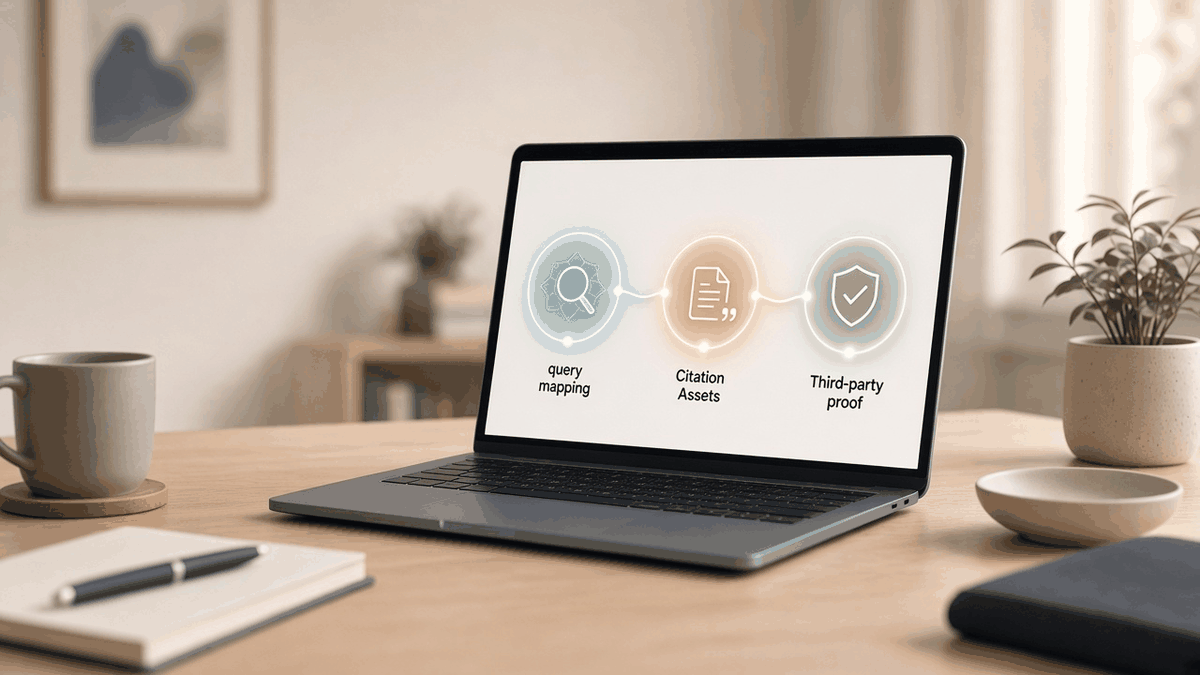
Days 31–60: Publish three citation assets
Choose one comparison table, one priced case study and one benchmark from your shortlist. Each asset should answer one question in the first screen and link to a short methodology page. Get client consent in writing before you name scope or price details. Link the three assets to each other so the topic cluster is obvious.
Days 61–90: Earn corroboration and refresh
Overviews often cite several sources for one answer, so independent confirmation matters. Pitch your benchmark to an industry association, a trade newsletter or a relevant podcast. Then rerun your query set and note any new citations or lost ones. Refresh the numbers in each asset on a fixed schedule, and date every update visibly.
Measuring Google AI Overviews Citations for Your B2B Firm
Measurement is where most small firms stall, because the familiar reports no longer tell the whole story. McKinsey's research on AI search found that only 16% of brands systematically track AI search performance. The same work estimates that about half of Google searches already show AI summaries. If you track citations at all, you are ahead of most of your market.
Metrics that replace the ranking report
Google reports traffic from AI features inside Search Console's Performance report, under the Web search type. It does not separate overview citations from classic results, so you need your own view. Track four monthly numbers: citation share on your query set, branded search volume, search-sourced inquiries and their pipeline. Our 2026 ROI playbook shows how to set a baseline before you judge any change.
Scenario: what citation share could mean in practice
This is a labeled scenario, not a forecast. Imagine a query set that generates 20,000 informational impressions per month, all with an overview. Applying Seer's 2026 averages, non-cited visibility would yield about 190 clicks and cited visibility about 415. Your numbers will differ by industry, query mix and brand strength, so use the scenario only to size the opportunity.
Governance for claims, prices and client data
Every published number becomes a public claim that buyers and machines will repeat. Assign one partner to approve benchmarks, prices and client references before release. If you use AI tools to monitor citations or draft pages, assess them like any other supplier. The foundation model vendor risk guide lists the questions to ask before client data touches a model.
Regulatory context you should watch
The rules around AI Overviews are not settled, especially in Europe. On 9 December 2025, the European Commission opened an antitrust probe into how Google uses publisher content for AI Overviews. The probe also covers AI Mode and asks whether publishers can refuse such use without losing Search access. The outcome could change how overviews source content, so do not build your entire pipeline on one surface.
Is Chasing AI Overview Citations Worth It for a Small Firm?
Usually yes, if your buyers research online before the first call. It is a lower priority if nearly all your work comes from referrals and repeat clients. The effort is modest when it builds on assets you already have, such as case notes and project data. The deciding factor is whether your prospects search the category before they search your name.
When it pays off
Citation work pays off when your category is searched, your delivery data is unique, and your competitors stay vague. It also pays off when buyers compare options, since tables and prices answer that need directly. Many small firms already use AI in daily work, which lowers the drafting cost. The OECD's 2024 survey of over 5,000 SMEs found generative AI in use at 31% of them.
When to hold back
Hold back if you cannot publish any numbers because of client confidentiality. In that case, invest in third-party mentions and speaking slots first, then return to owned assets. Also hold back if your website lacks basic indexing hygiene, because uncrawlable pages cannot be cited. Fix the foundations before you commission new content.
FAQ
Do I need special schema or an llms.txt file to appear in Google AI Overviews?
No, Google says AI Overviews and AI Mode need no extra technical requirements, special AI text files or special schema.org markup. A page must be indexed and eligible to show with a snippet. Structured data can still help classic results, but it is not a citation shortcut.
How long does it take a consultancy to earn its first AI Overview citation?
No public study gives a reliable timeline. A page first has to be indexed and snippet-eligible, and overviews change as Google refreshes them. Plan to track a fixed query set monthly for at least one quarter before you judge the results.
Does an AI Overview citation replace ranking on page one?
It complements ranking rather than replacing it. BrightEdge data shows only about 17% of cited sources also rank in the organic top ten, so citations and rankings now diverge. You need both signals in your reporting.
Should a boutique firm publish its prices to get cited?
Publishing price ranges or priced case studies gives overviews a concrete fact to cite for cost questions. You do not need a full rate card. Ranges tied to a named scope, with client consent, usually work better than a vague contact form.
Can I see AI Overview citations in Google Search Console?
Only indirectly, because Google reports traffic from AI features inside the Performance report under the Web search type. These clicks are mixed with classic results, so overview citations are not shown separately. To see whether you are cited, check a fixed query set manually or with a monitoring tool.
Methodology & Sources
We built this article from primary studies and official documentation published between February 2024 and June 2026. Where trackers disagree, we report each figure with its source instead of averaging them. Overview coverage differs by method, so keyword trackers report about 48% while clickstream panels report 20% or more of all searches. Click-through findings from Seer Interactive are correlational, as the authors themselves note.
Figures circulating in industry roundups sometimes differ from the primary sources. For example, the 58% figure often quoted for coverage is BrightEdge's year-over-year growth rate, not the share of queries. B2B technology coverage in BrightEdge's data is 82%, and healthcare is 88%, rather than a flat 90%. Statista's zero-click data series offers a further reference point for US trends.
Our primary sources are SparkToro, Pew Research Center, Seer Interactive and BrightEdge data reported by Search Engine Journal. Official context comes from Google Search Central, Gartner, McKinsey, the OECD and the European Commission. Each source is linked in the section where we use it.
Transparency
This article was drafted with AI assistance and edited by the Command EVE editorial team. We checked each figure against its linked source in September 2026. None of the cited studies was commissioned by Command EVE, and this article contains no paid placements. We make no promise of citations, traffic or revenue, because Google controls which sources an overview uses.
Author: Command EVE Editorial Team — Command EVE.
Sources
- https://sparktoro.com/blog/in-2026-less-than-one-third-of-google-searches-still-send-a-click/
- https://www.pewresearch.org/short-reads/2025/07/22/google-users-are-less-likely-to-click-on-links-when-an-ai-summary-appears-in-the-results/
- https://www.seerinteractive.com/insights/aio-impact-on-google-ctr-september-2025-update
- https://www.seerinteractive.com/insights/aio-impact-on-google-ctr-2026-update
- https://www.searchenginejournal.com/google-ai-overviews-surges-across-9-industries/568448/
- https://developers.google.com/search/docs/appearance/ai-features
- https://www.gartner.com/en/newsroom/press-releases/2024-02-19-gartner-predicts-search-engine-volume-will-drop-25-percent-by-2026-due-to-ai-chatbots-and-other-virtual-agents
- https://www.mckinsey.com/capabilities/growth-marketing-and-sales/our-insights/new-front-door-to-the-internet-winning-in-the-age-of-ai-search
- https://ec.europa.eu/commission/presscorner/detail/en/ip_25_2964
- https://www.oecd.org/en/publications/generative-ai-and-the-sme-workforce_2d08b99d-en.html
- https://www.statista.com/statistics/1620329/google-search-queries-with-zero-clicks/
- https://www.omnibound.ai/blog/google-ai-overviews-statistics
I bring AI cleanly into consulting and agency operations — marketing & sales first, then the next department. You stay in control through human gates.
LinkedIn →Where's your biggest AI lever?
In 3 minutes you see your AI ROI Score for free — and on the free call we discuss your 30-day plan.
Start your free AI ROI Score