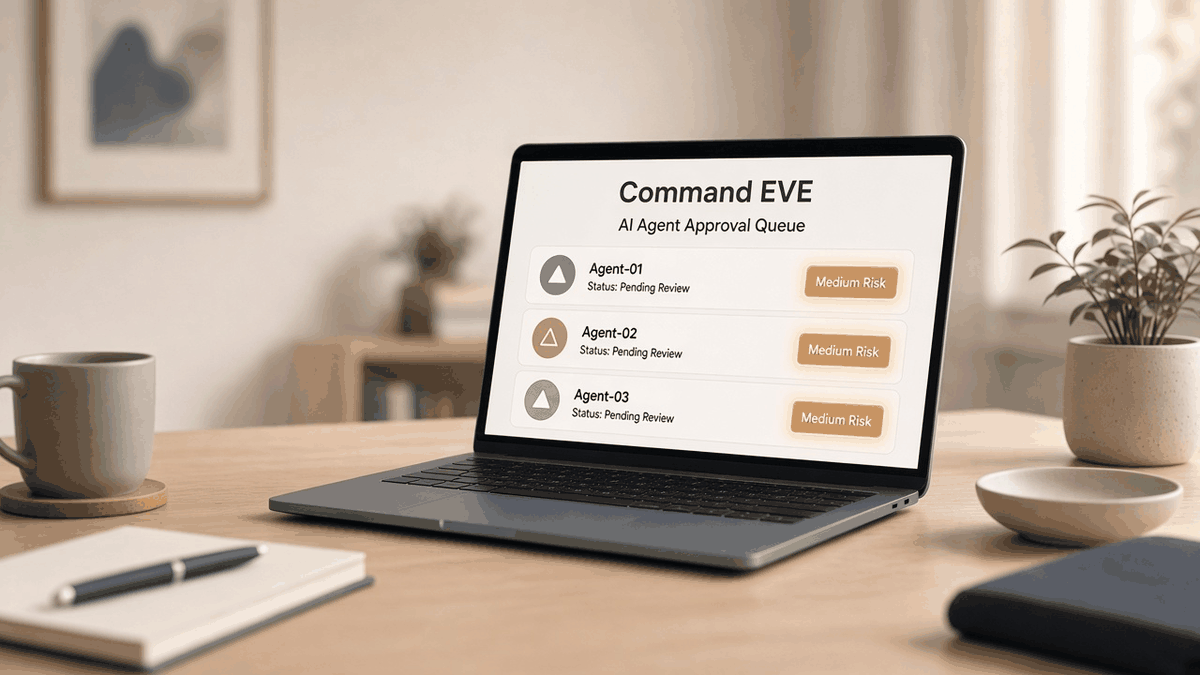
AI Agents in B2B Buying: How Consultancies Get Shortlisted
Buyers now send AI agents to research, compare and request quotes. Learn what consultancies need in offers, pricing, proof and quote flows to make the cut.


Last updated: 2026-09-30
Author: Command EVE Editorial Team — Command EVE.
Your next prospect may never read your website. Increasingly, AI agents handle the first stage of B2B buying: they research providers, compare offers and request quotes. A human often sees only the shortlist those agents produce. If your firm is invisible or ambiguous to them, you lose the deal before anyone knows it existed.
The shift is measurable, not hypothetical. Gartner found that 45% of B2B buyers used AI during a recent purchase, and 67% prefer a rep-free experience. This guide gives consultants, coaches and boutique agencies an operator's playbook for that first cut. It covers offers, pricing, proof and quote workflows you can fix this quarter.
What Changes When AI Agents Handle B2B Buying?
At a glance
- Buyer-side AI agents now research, compare and request quotes before a human sees your name.
- Agents reward offers they can parse: clear scope, stated price ranges, dated proof and a working quote channel.
- Gartner's 2026 surveys show strong demand for rep-free buying, yet 69% of buyers still validate AI output with a person.
- For service firms, ambiguity is the main avoidable risk, because vague scopes give agents nothing to compare.
- A focused 90-day program on offers, pricing, proof and quote intake is enough to start.
The short answer: the first cut moves from people to software. An agent receives a brief, turns it into criteria, collects evidence and asks shortlisted vendors for quotes. Humans still decide, but they decide among options a machine has already filtered.
From Search Results to Structured Shortlists
Classic search gave a buyer ten links, and answer engines then summarized those links into one response. Buying agents go further and act on the summary by filling forms, sending emails or calling vendor APIs. The output is no longer a page view but a ranked shortlist with reasons attached.
The commercial stakes are large, even if consumer retail moves first. McKinsey projects that agentic commerce could orchestrate $3 trillion to $5 trillion in global revenue by 2030. The same report notes that 44% of users who tried AI-powered search now call it their primary source. B2B service buyers carry those habits into work.
The Numbers Behind the Shift
According to Gartner's March 2026 survey of 646 B2B buyers, 45% used AI during a recent purchase. A May 2026 Gartner release added that buyers consult an average of seven information sources per purchase. Gartner also predicts that AI agents will outnumber human sellers tenfold by 2028.
Deloitte (March 2026) reports that 38% of B2B buyers use agentic AI. IDC (August 2026) puts the share at 80% among tech buyers. Forrester expects one in five sellers to face agent-led quote negotiations by the end of 2026. Samples and definitions differ, and we could not access these three primary reports, so treat them as directional.
Adoption is uneven, which shapes who sends agents your way. McKinsey's 2026 State of AI survey found 40% of large organizations scaling AI agents, up from 27% a year earlier. Among smaller organizations, the share stayed flat at 22%. Eurostat data shows the same gap: 55.03% of large EU enterprises used AI in 2025, against 19.95% of all enterprises.
Why Service Firms Feel It Differently Than Software Vendors
Software vendors already publish feature matrices, pricing tiers and integration docs that agents can read. Consultancies usually sell judgment, and judgment rarely arrives in a comparable format. An agent cannot weigh "bespoke transformation support" against a firm that states scope, duration and price band. The firms that translate expertise into structured offers get compared, while the rest risk being skipped.
How AI Agents Build a B2B Buying Shortlist
Most buying agents follow a similar loop, whether they run inside a procurement suite or a general assistant. Knowing that loop shows where AI agents in B2B buying can drop your firm. The three steps below are a simplified model, not a vendor specification.
Step One: Parse the Brief Into Criteria
A buyer might ask for "three GDPR-experienced change consultancies for a six-month ERP rollout in the DACH region." The agent converts that request into hard filters and softer preferences. Hard filters include region, language, certifications and a budget ceiling. If your public information does not state these facts explicitly, the agent has to guess or exclude you.
Step Two: Retrieve and Compare Evidence
Next, the agent gathers evidence from your website, directories, review platforms, LinkedIn and analyst mentions. In Gartner's survey, 51% of buyers said they were more likely to meet misleading information from GenAI. Expect buyer-side agents to cross-check claims and treat inconsistency as risk. A case study that exists only as a gated PDF is effectively invisible at this step.
Step Three: Request Quotes and Clarify
Finally, the agent contacts shortlisted vendors by form, email or an API if one exists. It asks clarifying questions and requests a price or range for a defined scope. Slow or unstructured replies can end the evaluation, because the agent simply moves to the next candidate. The human buyer then reviews a summary that already ranks you.
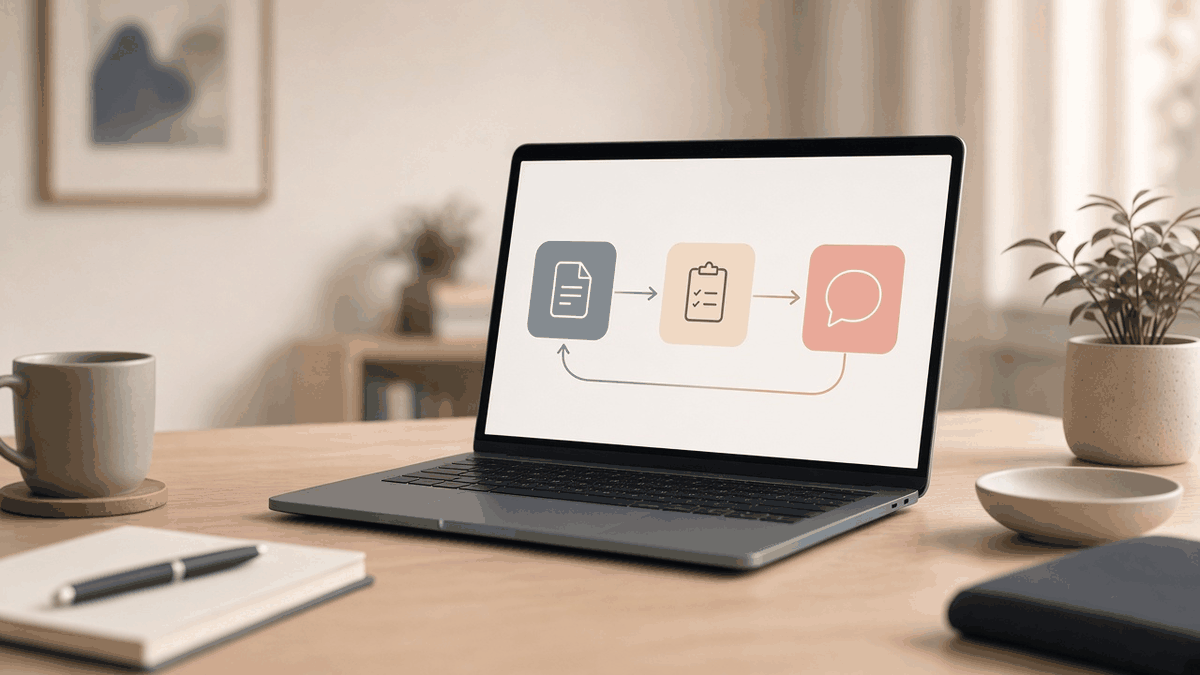
The table below maps each checkpoint in that loop to a common gap and a practical fix. Use it as a quick self-assessment before you change anything. Every row where your honest answer is "it depends" marks a place where an agent may drop you.
| What the agent checks | Typical consultancy today | What gets you shortlisted |
|---|---|---|
| Scope and deliverables | "Tailored engagements" with no defined outputs | Named packages with deliverables, duration and exclusions |
| Price | "Contact us for a quote" | Published starting prices or ranges per package |
| Proof | Client logos without context, gated PDFs | Dated case summaries with approved outcomes and references |
| Fit criteria | Implied somewhere in the prose | Stated regions, languages, industries, team size and certifications |
| Availability | Unknown until a discovery call | Next start window and capacity shown on the offer page |
| Quote channel | Generic free-text contact form | Structured intake with required fields and a response-time commitment |
| Compliance | Privacy policy only | Data-processing terms, security summary and AI-use disclosure |
Make Your Offer Machine-Readable
Machine-readable does not mean robotic. It means a buyer's agent can extract the same facts a careful human would, without guessing. The work splits into three layers: offer design, markup and consistency.
Productize the Scope Before You Mark It Up
Start with two to four named offers that cover most of your revenue. For each one, write the problem it solves, the deliverables, the duration, the team and what is excluded. This is sales hygiene first and search optimization second, because vague scope also stalls human buyers. Our guide to answer engine optimization for B2B services shows how to phrase these pages so answer engines can quote them.
Use Schema Markup and a Plain-Text Offer Sheet
Mark up each offer with schema.org Service and attach an Offer with a price specification where you can. Add a plain-text version of each offer sheet at a stable URL, which is easier to parse than a designed PDF. Some firms also publish an llms.txt file that points agents to these canonical pages. None of this guarantees a ranking, but it removes a common reason for exclusion.
Keep One Source of Truth Across Every Channel
Agents compare your website with directory listings, LinkedIn pages and partner profiles. A day rate on one page and a different package price elsewhere looks like risk, not flexibility. Maintain one internal offer register and update every public channel from it. Review the register quarterly, or whenever pricing or team capacity changes.
Should Consultancies Publish Their Prices?
Yes, in most cases you should publish at least a starting price or a range. An agent working to a budget ceiling cannot shortlist a firm that gives it nothing to compare. You keep negotiating room by pricing packages as ranges tied to scope variables, not as fixed quotes.
Price Ranges Beat "Contact Us"
A "contact us" button tells a human that pricing is flexible. To an agent with a budget filter, it reads as missing data. Gartner found that 70% of B2B buyers prefer a completely digital, self-service buying experience, which a mandatory pricing call undermines. An illustrative line such as "from €12,000 for a four-week diagnostic" is enough to pass the filter.
Anchor Pricing to Scope Variables
State which variables move the price, such as sites, stakeholders, workshops or data sources. Agents can then estimate where a specific brief lands within your range. This also protects you, because a request outside the stated assumptions triggers a human review. Buyers see fairness, and you keep control over the edge cases.
Protect Margin Without Hiding the Number
Transparency does not require publishing day rates or discount rules. Publish package ranges and keep rate cards, volume discounts and retainer terms for the qualified conversation. If you fear being undercut, compete on scope clarity and proof rather than opacity. Hidden prices protect margin only if the buyer's agent lets you into the room at all.
Proof Points That Survive Machine Scrutiny
Forrester's 2026 predictions for business buyers argue that sellers must shift "from persuasion to proof." The same logic applies when the first reader is software. Specific, dated and corroborated claims are the ones an agent can actually use.
Turn Case Studies Into Verifiable Claims
Rewrite each case study as a short, structured summary: client type, problem, intervention, outcome, date and a named contact where permitted. Replace adjectives with numbers the client has approved, and state the measurement period. Keep the full narrative for humans, but put the facts in the first paragraph. An agent can use a line like "cut month-end close from twelve to seven days in 2025," but not "transformed finance."
Third-Party Signals Carry More Weight
Your own claims are the weakest evidence an agent sees. Independent reviews, conference talks, association mentions and articles co-authored with clients all corroborate you. Forrester expects 75% of enterprise B2B companies to raise influencer relations budgets in 2026, citing AI-powered discovery. Our playbook on winning citations in Google AI Overviews shows how to earn those mentions systematically.
Credentials, Compliance and AI Disclosure
Procurement teams already use standard vendor questionnaires, and agents make them cheap to run on every candidate. Publish a short trust page covering certifications, data processing, subprocessors and how you use AI in delivery. IDC's 2025 Tech Buyer Survey found that 81% of buyers prioritize ethical AI use when selecting technology partners. Our GPAI Code of Practice buyer checklist lists the questions sophisticated buyers now ask.
How Do You Handle a Quote Request From an AI Agent?
Treat it like any qualified inquiry, but give it a structured path. Accept the request through a defined channel, answer within stated assumptions and route anything outside them to a person. Never let your own automation commit to price, scope or terms that a partner has not approved.
Build a Structured Intake Endpoint
Replace the free-text contact form with required fields that mirror your pricing variables. Structured fields leave less room for misreading on both sides, and your team can triage faster. More advanced firms expose intake through an API or an MCP server, so agents can query offers directly. Our MCP starter kit for SMBs explains the setup and its security trade-offs.
Set Rules for What an Agent Can Commit To
If you deploy your own assistant to answer buyer agents, write explicit limits. It may share published ranges, availability windows and standard terms, but never discounts, liability clauses or firm start dates. The EU AI Act's transparency rules apply from August 2026: people using a chatbot should know it is a machine. The OECD AI Principles set the same baseline of transparency and accountability for anyone deploying AI.
Put a Human on the Validation Moment
Gartner's May 2026 survey found that 69% of B2B buyers prefer to validate AI-generated insights with sales reps. That is your opening. When an agent shortlists you, the buyer's first call is a validation call, not a discovery call. Prepare a one-page brief that confirms the agent's summary, corrects its errors and adds the context software missed.
A 90-Day Plan for Getting Shortlisted
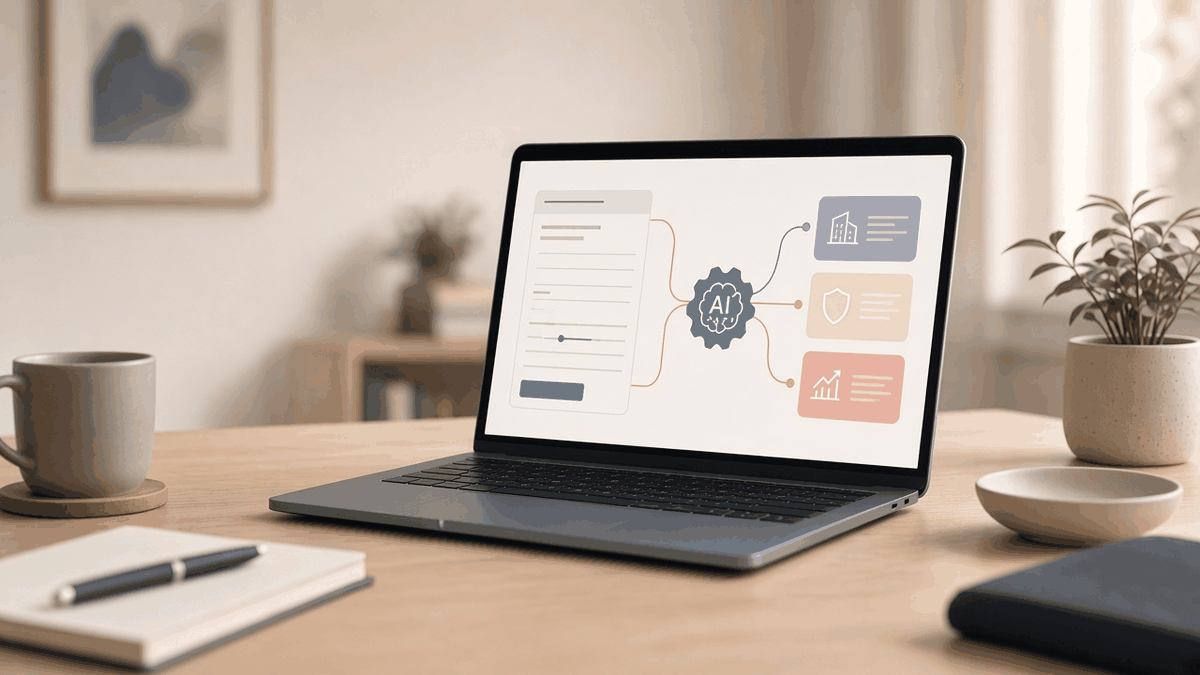
Preparing for AI agents in B2B buying does not require a transformation program. Most of the work is editorial and operational, and a small team can finish it in a quarter. Treat it like a pilot with clear checkpoints, as described in our guide to designing an AI agent pilot. The checklist below summarizes the target state at day 90.
- Two to four named offers with deliverables, duration and exclusions
- Published starting prices or ranges with stated scope variables
- Service and Offer schema markup on every offer page
- Structured case summaries with dated, client-approved outcomes
- A trust page covering data processing, security and AI use
- A structured quote intake with a response time you can keep
- Written rules for what automated replies may commit to
- A monthly re-run of your agent visibility audit
Days 1–30: Audit What Agents Already See
Ask two or three AI assistants to shortlist firms like yours for a realistic client brief. Record whether you appear, what they say about you and which facts they get wrong. A deep research agent can repeat this weekly and track competitors at the same time. Fix factual errors at the source first, because agents repeat what they find.
Days 31–60: Restructure Offers, Prices and Proof
Productize your core offers and publish ranges with the variables that move them. Rewrite your strongest case studies as structured summaries and add schema markup. Align directory listings and LinkedIn pages with the new offer register. Then re-run the audit prompts and compare the answers with your baseline.
Days 61–90: Test the Quote Workflow
Replace the contact form with structured intake and publish a response-time commitment. Send test requests through an AI assistant yourself and time the full loop. Write the commitment rules for any automated replies and brief the partners who take validation calls. At day 90, compare shortlist appearances and inquiry quality against your day-one results.
What Can Go Wrong When Agents Do the Buying?
Two risks stand out: overbuilding for a maturing trend, and liability for what machines say about you. Neither is a reason to wait. Both are reasons to keep the work lean and every claim verifiable.
Agent Washing and Overbuilding
Gartner predicts that over 40% of agentic AI projects will be canceled by the end of 2027. It cites escalating costs, unclear business value and inadequate risk controls, and warns about vendor "agent washing." For a consultancy, the lesson is to invest in durable assets like clear offers and proof, not custom agent infrastructure. If someone pitches you an agent-ready sales platform, ask what it does that structured pages and a good form cannot.
Misrepresentation and Stale Data
Forrester predicts that a Fortune 500 company will sue a B2B provider over AI-generated misrepresentation in 2026. Your exposure runs both ways: your content can mislead a buyer's agent, and an agent can misquote you. Date every claim, retire outdated case studies and keep an archive of what you published and when. Where an agent misrepresents you, correct the source and document the correction.
Keeping the Human Relationship Intact
Agents shortlist, but people still buy consulting. McKinsey's 2026 survey found 32% of organizations had skipped a software purchase because coding agents could build it in-house. Services may face a similar test as clients' own agents take on routine analysis. Structured offers get you into the room, and the partner who shows up still has to earn the work.
FAQ
What are AI buying agents in B2B procurement?
They are AI systems that act for a buyer during purchasing tasks. Typical tasks include researching providers, comparing offers against criteria and requesting quotes. A human usually sets the brief and makes the final decision.
Do small consultancies really need to prepare for AI agents in B2B buying?
Yes, but proportionately. Large clients adopt agents first, as McKinsey's 2026 scaling data shows, so your exposure depends on your client mix. The core fixes of clear offers, price ranges and proof also help human buyers, so the effort is rarely wasted.
Will publishing prices hurt my negotiating position?
A range tied to scope variables still leaves room to negotiate, because the final price depends on the brief. It mainly keeps you out of the "insufficient data" pile. Keep rate cards, discounts and retainer terms for qualified conversations.
How can I tell whether AI agents recommend my firm?
Run the same realistic client brief through several AI assistants and record the results each month. Note whether you appear, how you are described and which facts are wrong. Correct errors at their source, then test again.
Can I let my own AI assistant answer quote requests?
Yes, within written limits. It can share published ranges, availability and standard terms, while pricing exceptions and contract terms need human approval. Under the EU AI Act's transparency rules, people interacting with it should know it is an AI system.
Does schema markup guarantee my firm gets shortlisted?
No. Markup makes your offer easier to parse, but agents also weigh fit, proof and third-party signals. Treat it as a hygiene factor that removes one reason for exclusion.
Methodology & Sources
This article draws on analyst, survey and public-sector sources published between June 2025 and September 2026. We retrieved each source directly or, where a publisher blocked automated access, through an archived copy of the same URL. Figures are quoted as published, and the example price is illustrative and labelled as such.
- Gartner press releases: March 9, 2026 (646 B2B buyers, surveyed August–September 2025); May 20, 2026; November 18, 2025; June 25, 2025
- McKinsey, "The State of AI: Global Survey 2026" (1,719 respondents in 97 countries, fielded May–June 2026) and "The agentic commerce opportunity" (October 2025)
- Forrester, Predictions 2026 blogs on business buyers (November 13, 2025) and B2B go-to-market (October 28, 2025)
- IDC, "AI-mediated buying journeys," January 28, 2026
- Eurostat, "Use of artificial intelligence in enterprises," data extracted December 2025
- European Commission AI Act framework page and OECD AI Principles, both accessed September 30, 2026
Transparency
Command EVE develops AI software for consultants, coaches and boutique agencies, so we have a commercial interest in how firms adopt AI. No vendor, analyst firm or publisher mentioned here paid for inclusion or reviewed this article before publication. The article was researched and drafted with AI assistance for the Command EVE Editorial Team.
Three figures come from our research brief: Deloitte's 38%, IDC's 80% and Forrester's one-in-five forecast. We could not retrieve these primary reports, so they are unlinked and support no recommendation. Check the originals before quoting them.
Nothing here is legal advice or a promise of results. Shortlisting depends on buyer criteria, competition and factors outside your control. Consult qualified counsel on EU AI Act obligations.
Sources
- https://www.gartner.com/en/newsroom/press-releases/2026-03-09-gartner-sales-survey-finds-67-percent-of-b2b-buyers-prefer-a-rep-free-experience
- https://www.gartner.com/en/newsroom/press-releases/2026-05-20-gartner-survey-finds-sixty-nine-percent-of-b-two-b-buyers-turn-to-sales-reps-to-validate-ai-generated-insights
- https://www.gartner.com/en/newsroom/press-releases/2025-11-18-gartner-predicts-by-2028-ai-agents-will-outnumber-sellers-by-10x-yet-fewer-than-40-percent-of-sellers-will-report-ai-agents-improved-productivity
- https://www.gartner.com/en/newsroom/press-releases/2025-06-25-gartner-predicts-over-40-percent-of-agentic-ai-projects-will-be-canceled-by-end-of-2027
- https://www.mckinsey.com/capabilities/quantumblack/our-insights/the-state-of-ai
- https://www.mckinsey.com/capabilities/quantumblack/our-insights/the-agentic-commerce-opportunity-how-ai-agents-are-ushering-in-a-new-era-for-consumers-and-merchants
- https://www.forrester.com/blogs/predictions-2026-trust-will-be-the-ultimate-currency-for-b2b-buyers/
- https://www.forrester.com/blogs/predictions-2026-trust-gets-tested-for-b2b-marketing-sales-and-product-leaders/
- https://www.idc.com/resource-center/blog/ai-mediated-buying-journeys-how-buyers-decide-whos-worth-their-time/
- https://ec.europa.eu/eurostat/statistics-explained/index.php?title=Use_of_artificial_intelligence_in_enterprises
- https://digital-strategy.ec.europa.eu/en/policies/regulatory-framework-ai
- https://www.oecd.org/en/topics/ai-principles.html
- https://schema.org/Service
I bring AI cleanly into consulting and agency operations — marketing & sales first, then the next department. You stay in control through human gates.
LinkedIn →Where's your biggest AI lever?
In 3 minutes you see your AI ROI Score for free — and on the free call we discuss your 30-day plan.
Start your free AI ROI Score